Exit Interview Questions: A Complete Template (and What to Do With the Answers)
A great exit interview will not save the person walking out the door, but the right exit interview questions can save the next ten people like them. Done well, the conversation surfaces honest, specific feedback about why good people leave, what would have kept them, and which problems are quietly costing you talent. This guide gives you a complete, categorized template of questions to ask, best practices for running the conversation, and a practical framework for analyzing the answers, along with an important caveat: the exit interview is a lagging signal, and real retention starts long before anyone gives notice.

Code answers into a few stable themes, then act on the patterns instead of one-off stories.
What is an exit interview, and what is it actually for?
An exit interview is a structured conversation (or short survey, or both) with a departing employee, usually in their final week or two. Its purpose is to collect candid, actionable feedback about the experience of working at your company so you can improve it for the people who stay; closure and paperwork are side effects.
That distinction matters. The departing employee has, in a sense, nothing left to lose, which makes them one of your most honest sources of feedback about management, growth, workload, and culture. But because they are already leaving, the value of an exit interview is almost entirely forward-looking. You are running it to find the patterns that, left unaddressed, will keep producing more departures just like this one; changing their mind stopped being realistic when they signed the other offer.
A few things a good exit interview process is trying to learn:
- The real reason someone left, which is often different from the polite reason on the resignation letter.
- Whether this was a regretted departure (someone you wanted to keep) or not, since those carry the most signal.
- Which issues are personal and one-off versus systemic and repeatable.
- What concrete changes would have made a difference, in the employee's own words.
Exit interview best practices
Before the question bank, the mechanics. The same questions produce wildly different answers depending on how you run the conversation. A few best practices that consistently improve the quality of what you hear:
- Use a neutral interviewer. People are far more candid when their direct manager is not in the room. HR, People Ops, or a manager once removed usually gets more honest feedback, especially about management itself.
- Make it clearly safe. Explain how the feedback will be used, who will and will not see attributed comments, and that honesty will not affect references. Psychological safety is the whole ballgame here.
- Combine a survey with a conversation. A short structured survey gives you clean, comparable data across departures; a live conversation captures nuance and follow-up. Doing both gets you the best of each.
- Ask open questions and then stay quiet. The most useful material usually comes after a pause. Resist filling silence or getting defensive.
- Standardize your core questions. If everyone is asked the same core set, you can compare answers over time and across teams. Add a few role-specific questions on top.
- Time it well. Late enough that the person is comfortable being honest, early enough that they have not fully checked out. The middle of the notice period often works best.
- Close the loop internally. Exit feedback that no one acts on is worse than no feedback, because it trains your team to believe nothing changes.
36 sample exit interview questions to ask (with examples, by category)
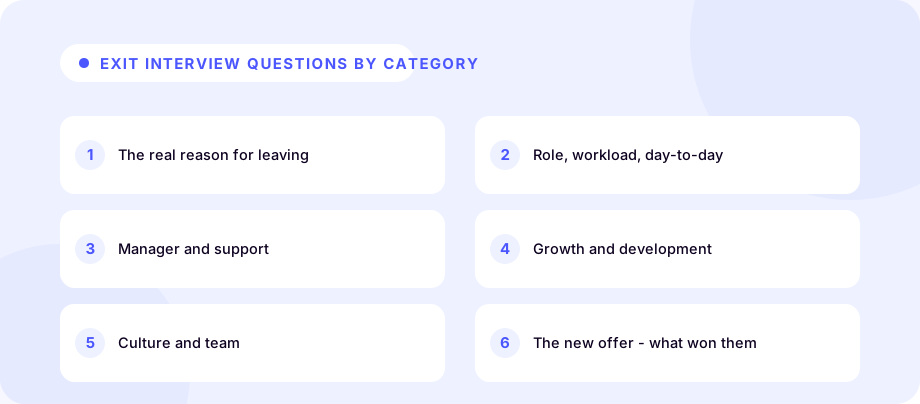
Below is a categorized bank of 36 sample exit interview questions to ask, with examples grouped by theme. You do not need to ask all of them. Pick a core set of 10 to 15 that fit your context, keep them consistent across departures so you can spot patterns, and use the rest as follow-ups. The categories are deliberately mapped to the most common drivers of turnover.
Reasons for leaving
Start broad and let the person lead before you probe specifics.
- What ultimately prompted you to start looking for a new role?
- Was there a specific moment or event that tipped the decision?
- How long had you been thinking about leaving before you decided?
- What does your new role offer that this one did not?
- Is there anything we could have done to keep you?
- If you could change one thing that would have made you stay, what would it be?
Role, growth, and development
This theme is one of the most common reasons strong performers leave, so dig in.
- Did your role match what you expected when you joined?
- Did you feel you had room to grow and advance here?
- Were your skills and strengths used well in your work?
- Did you have a clear sense of what progression looked like for you?
- Did you get the development, mentorship, or learning you wanted?
- Was your work challenging in a good way, or under- or over-stretching?
Management and leadership
Ask these only when the manager is not the interviewer.
- How would you describe your relationship with your manager?
- Did you receive useful, regular feedback on your work?
- Did you feel recognized and appreciated for your contributions?
- Did your manager support your growth and remove obstacles for you?
- Was leadership transparent about decisions that affected you?
- Did you feel comfortable raising concerns, and were they acted on?
Compensation and benefits
People rarely lead with pay, but it often sits underneath other complaints.
- How fair did you feel your compensation was for your work?
- Did our benefits and perks meet your needs?
- Did pay or benefits play a role in your decision to leave?
- How does your new total package compare to this one?
Culture, team, and day-to-day experience
- How would you describe the team culture to someone considering joining?
- Did you feel you belonged and were respected here?
- Was your workload sustainable over time?
- Did you have the tools, resources, and information to do your job well?
- How would you describe the balance between work and the rest of your life here?
- Were our stated values reflected in how we actually operated day to day?
Onboarding, process, and tools
- Looking back, how well did onboarding set you up for success?
- Were there processes or systems that regularly got in your way?
- What is one thing that would make this job easier for the next person in it?
Looking forward and would-you-return
These often produce the most candid and useful single answers.
- Would you consider returning in the future under the right circumstances?
- Would you recommend us as a place to work to a friend? Why or why not?
- What advice would you give your manager or leadership about retention?
- What did we do well that we should be sure to keep?
- Is there anything we have not asked about that you think we should know?
A practical tip: a strong closing question is simply, "If you were running this team, what is the first thing you would change?" It reframes the conversation from complaint to constructive design and often produces the single most useful answer of the session.
What to do with the answers
A pile of exit interview transcripts is not insight. The value comes from turning individual stories into patterns you can act on. Here is a simple framework.
1. Code every answer into consistent themes. Map each piece of feedback to a small, stable set of categories, for example: growth, manager, pay, workload, culture, role fit, and life circumstances. Consistent coding is what lets you compare a departure this quarter with one from last year.
2. Separate regretted from non-regretted exits. Not every departure is a loss. Tag whether each person was someone you wanted to keep. Patterns among regretted exits are where your retention attention belongs.
3. Look for clusters, not anecdotes. One person leaving for compensation is a data point. Five regretted exits from the same team in six months, all mentioning the same manager or the same broken process, is a signal that demands action. Slice your themes by team, manager, tenure, and time.
4. Connect exit data to your turnover numbers. Pair qualitative themes with your actual employee turnover rate so you can quantify which patterns are costing you the most people and prioritize accordingly.
5. Translate themes into owned actions. Each recurring theme should become a specific change with an owner and a date rather than a slide in a deck. If "lack of growth" comes up repeatedly, that points straight at the reasons good employees leave and at concrete fixes in your employee retention strategies.
6. Close the loop. Tell the remaining team, in general terms, what you heard and what you are changing. This is how you convert exit feedback into trust rather than cynicism.
The catch: exit interviews are a lagging signal
Here is the uncomfortable truth about even a flawless exit interview process: by the time you are running one, you have already lost. The decision is made, the offer is signed, and your influence is gone. Exit interviews tell you, with hindsight, why the last person left. They cannot tell you who is about to leave next.
To actually retain people, you have to move your attention earlier in the timeline, well before the resignation conversation. That means catching employee flight risk while there is still time to do something about it. There are usually plenty of signs an employee is about to quit weeks or months ahead: a quiet drop in engagement, withdrawal from long-term work, or a noticeable uptick in outside networking and profile activity. The whole point of learning how to predict employee turnover is to give yourself lead time, the one thing an exit interview can never provide.
The best counterpart to the exit interview is its proactive twin: the stay interview. Instead of asking why someone is leaving, you ask, while they are still happy and present, what would make them stay and what is starting to frustrate them. A simple set of stay interview questions run on a regular cadence surfaces fixable problems while you can still fix them. Watching for quiet quitting and other early disengagement signals does the same. Run together, stay interviews catch problems early, exit interviews explain the ones you missed, and over time the gap between them shrinks.
Bringing it together
Exit interviews are worth doing, and worth doing well, but keep them in their proper place. They are a rear-view mirror: invaluable for understanding the road behind you, useless for steering. Use a consistent, categorized set of questions (our exit interview template turns them into a reusable form), run them in a way that earns honesty, analyze the answers for patterns instead of treating each as a one-off, and act visibly on what you learn. That is how a conversation with someone who is leaving becomes a reason for the next person to stay.
The most durable retention happens long before the exit interview, when you catch the early signals and have the conversation that keeps a good person from ever updating their resume. TeamPredict summarizes publicly available LinkedIn activity into a simple resignation-risk level for each employee you track, so you get a proactive nudge while there is still time to act, not a post-mortem after they are gone. If you would rather prevent the exit interview than perfect it, start a free 30-day trial of TeamPredict (no charge until the trial ends, cancel anytime) and turn early signals into more of the saves that matter.
Frequently asked questions
- What questions are asked in an exit interview?
- Exit interviews typically cover the real reasons for leaving, the role and growth opportunities, the relationship with the manager, compensation and benefits, team culture, day-to-day workload, and whether the person would consider returning. A good template groups questions by theme so you can spot patterns across departures rather than treating each one as a one-off story.
- Where can I find sample exit interview questions?
- This guide includes 36 sample exit interview questions with examples, grouped into categories like reasons for leaving, growth and development, management, pay and benefits, and culture. Pick a consistent core set of 10 to 15 questions to ask every departing employee so you can compare answers and spot patterns over time, and keep the rest as optional follow-ups.
- What should you say in an exit interview?
- If you are the departing employee, be honest but constructive: focus on specific, factual examples rather than venting, name what would have made you stay, and frame feedback as something the company can act on. You are not obligated to share everything, but specific, professional feedback is more useful to former colleagues you may want as references or future connections.
- Who should conduct an exit interview?
- A neutral party usually gets the most candid answers, which is why HR or People Ops often runs the conversation rather than the direct manager. People are more likely to be honest about management or culture issues when their soon-to-be-former boss is not in the room. Some teams use a short written survey plus a live conversation to capture both structured data and nuance.
- Are exit interviews actually worth doing?
- Yes, but with a clear-eyed view of their limits. Exit interviews are a lagging signal: by the time you run one, the person is already gone, so the data helps you fix systemic issues for the people who remain rather than save the person leaving. They are most valuable when you analyze answers in aggregate and pair them with earlier signals like stay interviews and flight-risk indicators.
- How do you analyze exit interview answers?
- Code each answer into a small set of consistent themes such as growth, manager, pay, workload, and culture, then look for patterns across departures, segments, and time. One person leaving for pay is an anecdote; a cluster of regretted exits from one team citing the same manager is a signal worth acting on. The goal is to turn individual stories into trends you can fix.
About TeamPredict
TeamPredict Team
We build TeamPredict - retention early-warning software that flags resignation risk from public LinkedIn signals. We write about the patterns that precede a resignation and how people-first teams act on them early. Learn more about TeamPredict
Find out who's showing exit signals.
Score one person's flight risk in a couple of minutes with the free assessment - then let TeamPredict watch the rest daily.
Run the free flight-risk assessmentFree, no signup required.