Quiet Quitting: What It Is, Why It Happens, and How to Spot It Early
Most managers notice quiet quitting only after the energy is already gone: the colleague who used to volunteer ideas now waits to be asked, ships exactly what was requested, and logs off the moment the meeting ends. Quiet quitting is the steady withdrawal of discretionary effort by someone who has quietly disengaged from the work; nobody is slacking off or breaking rules. This guide explains what quiet quitting really means, why it happens, how to spot the early signs on your team, and how to re-engage people with empathy, before disengagement turns into a resignation.
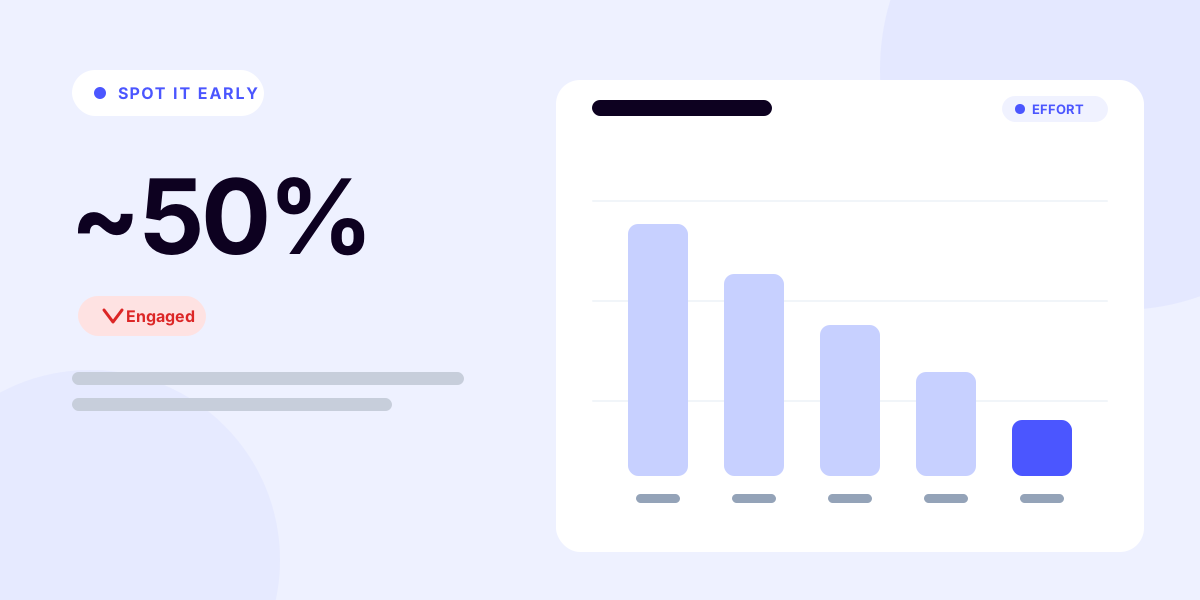
Effort fades step by step, months before anyone hands in their notice.
What is quiet quitting?
Quiet quitting is when an employee scales their effort back to the strict boundaries of their job description. They still meet expectations and do what is asked - but they stop reaching beyond it. The extra hour to polish a deliverable, the unprompted idea in a meeting, the willingness to pick up the messy problem nobody owns: that discretionary effort fades.
The most important thing to understand is what quiet quitting is not:
- It is not laziness. Quiet quitters usually still do their actual jobs. Many were high performers until something shifted.
- It is not insubordination. Nobody is breaking a rule. In fact, "doing only your job" is a defensible position, which is exactly why it is easy to miss and hard to address as a performance issue.
- It is not necessarily permanent. It is a state, often a reaction to specific conditions, and it is frequently reversible once those conditions change.
A clearer way to frame it: quiet quitting is disengagement made visible through behavior. The employee has emotionally checked out of the mission while remaining physically present in the role.
Quiet quitting, silent quitting, and soft quitting
You will see the same idea described under a few different labels. Silent quitting and soft quitting are close variants of the same concept: an employee quietly pulling back effort and emotional investment while staying in their seat. The vocabulary varies by who is writing; the underlying behavior does not. Whether your team calls it quiet quitting, silent quitting, or soft quitting, you are talking about the same retention signal: someone who is still here but no longer here.
It is also worth separating quiet quitting from two neighbors it gets confused with:
- Healthy boundaries are deliberate and sustainable: someone protecting their evenings or saying no to scope creep while staying genuinely engaged in the work. That is not quiet quitting; that is good self-management, and punishing it is how you create the real thing.
- Burnout is the exhaustion and depletion that often drives quiet quitting. Burnout is the cause; the visible pullback is one of its symptoms.
Why quiet quitting happens
People rarely disengage for no reason. Quiet quitting is almost always a rational response to a work situation that has stopped meeting a basic need - for growth, recognition, fairness, or rest. The most common drivers:
- Burnout and chronic overload. When someone has been carrying too much for too long, withdrawing discretionary effort is a form of self-protection. They are not being difficult; they are out of fuel.
- Unclear or stalled growth. If there is no visible path forward (no promotion in sight, no new challenge, no sense that effort compounds into a career), the rational move is to stop over-investing.
- A weak relationship with their manager. Disengagement frequently traces back to the manager relationship: infrequent or low-quality one-on-ones, no real feedback, or a sense that nobody notices the work. People don't go the extra mile for a relationship that feels transactional.
- Feeling undervalued. When extra effort goes unrecognized, or worse, is simply absorbed and expected, people learn that discretionary effort is invisible. So they stop spending it.
- Broken trust or perceived unfairness. A reorg handled badly, a promised raise that never came, watching a strong colleague leave and nothing change. Each of these quietly teaches people to protect themselves.
Notice the through-line: most of these causes are management-addressable. That is the encouraging part. Quiet quitting is often the team telling you something true about the work environment, in the only language available to someone who hasn't decided to leave yet. For a deeper look at the underlying causes, our guide on why good employees leave - and how to keep them maps the same drivers to eventual departures.
The observable signs of quiet quitting on a team
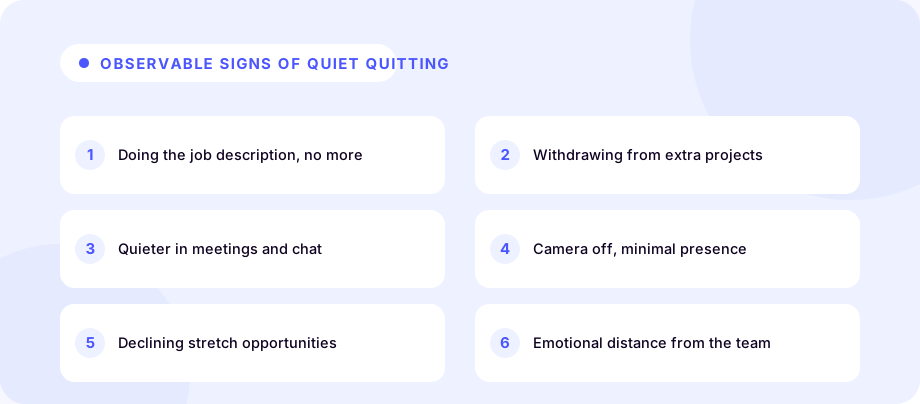
Quiet quitting is subtle by definition, but it is rarely invisible. The signals show up as a change from someone's baseline, which is why knowing your people matters more than any checklist. Watch for shifts like these:
- Discretionary effort disappears. Work meets the spec and stops there. The polish, the proactive flag, the "I noticed this too": gone.
- Quieter in meetings. Someone who used to challenge ideas or volunteer now stays on mute, camera off, contributing only when directly asked.
- Withdrawal from the team's social fabric. Skipping optional gatherings, going quiet in team channels, declining to mentor or help newer colleagues.
- Shrinking ambition in one-on-ones. Growth conversations stall. They stop raising new goals, stop asking about the future, and answer "how are things going?" with a flat "fine."
- Strict clock boundaries appear suddenly. Not the healthy kind: a noticeable, abrupt hardening, often paired with other signs, that reads more like withdrawal than balance.
- Initiative drops on ownership. The messy, unowned problems they used to absorb now sit untouched. Responses get shorter; follow-through gets thinner.
One signal in isolation usually means nothing: everyone has off weeks, and tired is not the same as disengaged. A cluster of these, sustained over time and clearly different from how that person used to operate, is what deserves a conversation. For a broader pattern library that overlaps here, see our list of signs an employee is about to quit. One adjacent signal worth reading fairly rather than punishing is moonlighting - taking on a second job, which is usually a message about pay, growth, or security.
How quiet quitting connects to flight risk
Here is why this matters beyond engagement scores: a quiet quitter is very often an early-stage flight risk.
Disengagement is rarely the final stop. For many people, the sequence runs roughly like this:
- Something at work stops working: overload, a stalled promotion, a recognition gap.
- They withdraw discretionary effort to protect themselves. This is the quiet quitting stage.
- The underlying issue goes unaddressed, so disengagement hardens into resentment or resignation-in-spirit.
- They begin looking: updating their profile, reconnecting with their network, taking the recruiter call they used to ignore.
- They resign. To the manager, it feels sudden. In hindsight, it was months in the making.
Quiet quitting is the window between something is wrong and I'm leaving, and it is the cheapest, most humane place to intervene. Catch it at stage two and you can usually fix the root cause. Miss it until stage five and you are managing a transition, not a relationship.
This is also where disengagement starts leaving an external footprint. As someone moves from quietly checking out toward actively exploring, that shift often becomes visible in public professional activity: a refreshed profile, renewed networking, more outward signaling. Connecting internal cues with those external signals is the core idea behind predicting employee turnover before it happens. It is also what TeamPredict is built for: turning early, public signals of flight risk into a simple risk level per tracked employee, so the people who can actually help hear about it months earlier than they otherwise would. The goal is to prompt the supportive conversation earlier, while it still makes a difference.
What managers should do: re-engage, don't punish
The single worst response to quiet quitting is to treat it as a discipline problem. Cracking down on someone who has already withdrawn (micromanaging, calling out "low commitment," tightening surveillance) confirms exactly the story that made them disengage in the first place, and accelerates the exit. Re-engagement is the only response that works.
1. Start with a real conversation, not a verdict
Lead with curiosity. The aim is to understand what changed, and your tone sets whether you get an honest answer or a defensive one. A stay conversation is the right tool here: a forward-looking, supportive chat about what would make staying genuinely worth it. Try openers like:
- "How are you finding the work lately: what's energizing you, and what's draining you?"
- "If you could change one thing about your role right now, what would it be?"
- "What would make the next six months here feel like real progress for you?"
If you want a ready-made structure, our stay interview questions template gives you a full set to adapt.
2. Fix the workload and the recognition gap
Two of the most common, most fixable causes:
- Workload. If someone is buried, no pep talk will re-engage them. Audit what they are actually carrying, rebalance it, and protect their focus. Relief is more motivating than recognition when someone is depleted.
- Recognition. If their effort has been invisible, make it visible, specifically and sincerely. Name the actual contribution, not a generic "great job." People re-invest discretionary effort when they trust it will be seen.
3. Reconnect the work to growth
Disengagement often means someone has lost the thread between today's work and tomorrow's growth. Re-establish it: clarify what advancement looks like, hand them a stretch project that matters, or invest in a skill they care about. A credible path forward is one of the strongest antidotes to quiet quitting. Done fairly, an internal move (a deliberate form of quiet hiring) can give a stalled high performer exactly the new challenge that re-engages them.
4. Then follow through, visibly
This is the step most managers skip, and it is the one that decides everything. If you ask what's wrong, hear the answer, and change nothing, you have made the disengagement worse and taught the whole team that these conversations are theater. Pick one or two things you heard and act on them within weeks. Visible follow-through is what rebuilds the trust that quiet quitting eroded.
These moves sit inside a broader system. Quiet quitting is a symptom; a healthy environment is the cure. Our guides on employee engagement strategies that reduce turnover and employee retention strategies that actually work cover the structural side: the practices that keep discretionary effort high before any individual conversation is needed.
A simple weekly habit for managers
You don't need a program to get ahead of quiet quitting. You need a habit:
- Know each person's baseline: how they normally show up, contribute, and engage.
- Notice sustained shifts, not single bad days. Look for clusters over time.
- Get curious early. When you see a cluster, open a supportive conversation before it hardens.
- Act on what you hear, visibly, on at least one thing.
- Watch the trend. Re-engagement is rarely instant; check whether energy is returning over the following weeks.
Done consistently, this turns quiet quitting from a surprise you discover at the exit interview into a signal you respond to while you can still change the outcome.
Read the signal, fix the cause
Quiet quitting (also called silent quitting or soft quitting) is disengagement made visible, and disengagement is information. Read fairly and caught early, it is one of the most actionable retention signals a manager has: a chance to fix something real, re-engage a person who hasn't decided to leave yet, and keep someone good. The managers who do this well listen sooner and act on what they hear.
Disengagement is easiest to reverse before it hardens. If you'd like an early, respectful read on who might be drifting toward the exit, start a free TeamPredict trial: it's $5 per tracked employee per month, 30 days free, no charge until the trial ends, cancel anytime.
Quiet quitting has a manager-side counterpart every leader should recognize: quiet firing.
Frequently asked questions
- What is quiet quitting?
- Quiet quitting is when an employee stops going above and beyond and dials their effort back to the formal boundaries of their role. They still do their job, but they withdraw the discretionary effort - the extra ideas, initiative, and energy - that they used to bring. It is a sign of disengagement, not laziness.
- What does quiet quitting mean for a manager?
- For a manager, quiet quitting usually means something in the work, the workload, or the relationship has stopped working for that person. It is best read as an early, fixable signal - a prompt to have an honest conversation and address the root cause, not as a discipline issue to be punished.
- Is quiet quitting the same as being lazy or a bad employee?
- No. Quiet quitting is typically about disengagement, burnout, or feeling undervalued, and it often shows up in people who were previously high performers. Framing it as laziness misreads the cause and almost always makes it worse. The more useful question is what changed and why.
- What is the difference between quiet quitting, silent quitting, and soft quitting?
- They describe the same underlying behavior: an employee quietly withdrawing discretionary effort and emotionally checking out while staying in the role. 'Silent quitting' and 'soft quitting' are simply close variants of the same term, and people use them interchangeably.
- How do you stop quiet quitting on a team?
- You stop it by re-engaging people with empathy: hold stay conversations, fix workload and recognition gaps, clarify growth paths, and follow through visibly on what you hear. Punishing or surveilling people deepens disengagement. Addressing the root cause early is what brings energy back.
About TeamPredict
TeamPredict Team
We build TeamPredict - retention early-warning software that flags resignation risk from public LinkedIn signals. We write about the patterns that precede a resignation and how people-first teams act on them early. Learn more about TeamPredict
Find out who's showing exit signals.
Score one person's flight risk in a couple of minutes with the free assessment - then let TeamPredict watch the rest daily.
Run the free flight-risk assessmentFree, no signup required.