Signs of a Toxic Work Environment (and How to Fix It)
Most people can feel a toxic work environment long before they can name it - the Sunday-night dread, the meetings that punish honesty, the quiet calculation of how little you can say. The clearest signs of a toxic work environment are persistent patterns rather than single dramatic events: fear-based leadership, broken communication, and a culture where people protect themselves instead of doing their best work. This guide breaks those signs down by theme, explains how a toxic workplace quietly drives turnover, and gives leaders a practical way to diagnose and fix it - plus a short, honest note for anyone currently stuck in one.
Patterns that wear people down on the left; the conditions that keep them on the right.
What is a toxic work environment?
A toxic work environment is one where the everyday norms - how people are treated, how decisions get made, what behavior gets rewarded - reliably damage employees' wellbeing, trust, or sense of fairness. The key word is reliably. Every workplace has bad days, tense projects, and difficult personalities. What makes an environment toxic is that the harm is patterned and predictable, not occasional.
It is also worth being clear about what toxicity is not. A demanding job is not automatically toxic. High standards, hard feedback, and real pressure can all exist inside a healthy, respectful culture. The difference is whether people feel supported and safe while meeting those standards, or whether they feel diminished, exploited, or unsafe. Hard-but-fair builds people up; toxic wears them down.
Finally, toxicity is rarely the work of a single villain. It is usually systemic - the accumulated result of unaddressed bad management, unclear expectations, unsustainable workload, and a culture where speaking up carries a cost. That is actually good news for leaders, because systems can be changed. But it means the fix is never as simple as removing one difficult person.
The signs of a toxic work environment
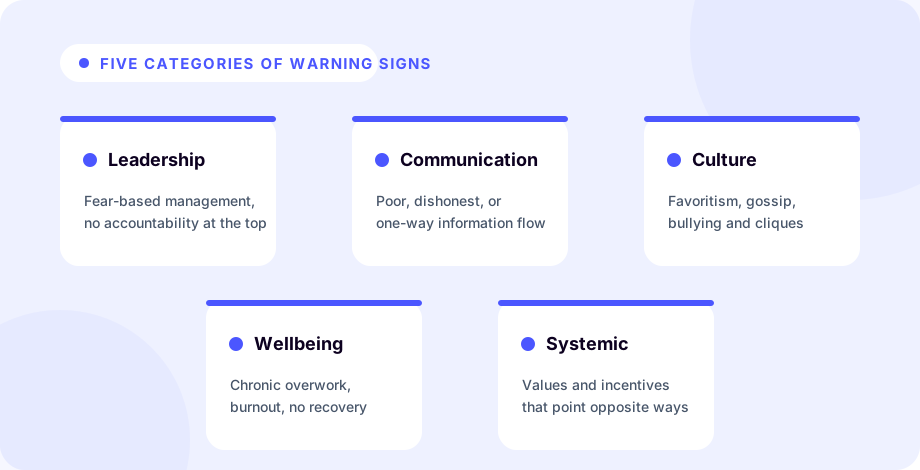
No single item below proves a workplace is toxic. Everyone has a stressful week; one cranky manager is not a culture. What matters is the cluster and the duration - several of these patterns showing up together, persisting over time, and shaping how people behave. Here are the signs, grouped by where they come from.
Leadership and management signs
Most toxicity flows downhill. When the environment is bad, the cause usually starts here:
- Fear-based leadership. People manage upward to avoid blame rather than to do good work. Mistakes get hidden instead of surfaced and fixed.
- Inconsistent or unpredictable managers. The same action gets praised one week and punished the next, so nobody knows where they stand. Unpredictability is corrosive even when the manager is sometimes kind.
- Favoritism and in-groups. Opportunities, visibility, and grace are handed out based on closeness to power rather than contribution.
- No accountability at the top. Bad behavior from senior or "high-performing" people is tolerated because they are seen as too valuable to challenge. Everyone notices what leadership protects.
- Credit-taking and blame-shifting. Wins flow up; failures flow down. Over time, people stop bringing their best ideas to a place that will absorb them without acknowledgment.
Communication signs
How information moves through an organization is one of the most reliable tells:
- Poor or dishonest communication. Decisions arrive with no context, promises quietly evaporate, and people learn not to trust what they are told.
- Mixed messages. Stated values and actual incentives point in opposite directions: "we care about balance" alongside a norm of midnight emails.
- Feedback only flows one way. Criticism rains down, but raising a concern upward is treated as disloyalty.
- Silence as self-protection. In meetings, people wait to see which way the wind is blowing before speaking. Real opinions move to private channels and hallway conversations.
Culture and behavior signs
These are the interpersonal patterns people usually mean when they call a place "toxic":
- Gossip, cliques, and politics. Energy goes into alliances and back-channeling rather than the work itself.
- Bullying or belittling, including subtle versions. Public criticism, sarcasm dressed as feedback, or persistent undermining that is easy to deny and exhausting to endure.
- Exclusion and disrespect. People are talked over, left out of decisions that affect them, or treated as interchangeable.
- A blame culture. The first question after a problem is "who did this?" rather than "what in the system let this happen?"
- Normalized dysfunction. New hires arrive, notice something is wrong, and are gradually told "that's just how it is here." The drift toward quiet quitting often starts exactly here, as people protect themselves by withdrawing effort.
Wellbeing and burnout signs
A toxic environment shows up in bodies and calendars, not just feelings:
- Chronic overwork with no recovery. Long hours are a permanent state, not an occasional crunch, and there is no real "after."
- Boundaries treated as a problem. Taking PTO, logging off, or protecting focus time is met with guilt, friction, or quiet penalties.
- Visible exhaustion and cynicism. People who were once engaged become depleted, detached, and resigned. Sarcasm replaces enthusiasm.
- Quiet firing. Sometimes the burnout is engineered: a manager withdraws support, opportunity, and feedback to push someone toward the door without a conversation. We unpack this dynamic in our guide to quiet firing and why it backfires.
Systemic and structural signs
Finally, the patterns that live in the organization itself rather than any individual:
- High, unexplained turnover. People keep leaving, especially good people, and leadership treats each exit as an isolated event rather than a pattern.
- Unclear or shifting expectations. Goals move without warning, roles blur, and success is impossible to define, so it is impossible to feel competent.
- No path forward. Growth, promotion, and development stall, and people sense their ceiling without anyone naming it.
- Recognition that never comes. Effort disappears into a void. The link between doing good work and being valued is broken.
If several of these resonate, you are likely not imagining it. The next question is what toxicity actually costs - and that cost is where the business case for fixing it lives.
Toxic workplace checklist
If you want a faster read than the sections above, use this toxic workplace checklist as a quick self-assessment. It turns the signs already covered in this guide into simple yes/no statements - nothing new, just the same patterns in a scannable form. For each row, tick the box if it is true of your workplace most of the time, not just on one bad week, then read the tally guide underneath.
Toxic work environment signs at a glance
| # | Warning sign - tick the box if it is true of your workplace most of the time | True of us? |
|---|---|---|
| 1 | Leadership runs on fear - people manage upward to avoid blame, and mistakes get hidden instead of surfaced and fixed. | ☐ |
| 2 | Managers are inconsistent - the same action is praised one week and punished the next, so nobody knows where they stand. | ☐ |
| 3 | Favoritism decides who gets opportunity, visibility, and grace, based on closeness to power rather than contribution. | ☐ |
| 4 | There is no accountability at the top - bad behavior from senior or "high-performing" people is tolerated. | ☐ |
| 5 | Credit flows up and blame flows down - wins get absorbed, failures get pinned on the people below. | ☐ |
| 6 | Communication is poor or dishonest - decisions arrive with no context and promises quietly evaporate. | ☐ |
| 7 | Stated values and real incentives point in opposite directions ("we care about balance" alongside a norm of midnight emails). | ☐ |
| 8 | Feedback only flows one way - criticism rains down, but raising a concern upward is treated as disloyalty, so people stay silent. | ☐ |
| 9 | Gossip, cliques, and politics absorb the energy that should go into the work. | ☐ |
| 10 | Bullying, belittling, exclusion, or disrespect is present - including subtle, deniable versions like sarcasm dressed as feedback. | ☐ |
| 11 | Blame comes before curiosity ("who did this?" rather than "what let this happen?"), and dysfunction is normalized as "just how it is here." | ☐ |
| 12 | Overwork is chronic with no real recovery, and protecting boundaries or taking PTO is met with guilt or quiet penalties. | ☐ |
| 13 | People look visibly exhausted, cynical, and checked out - the drift toward quiet quitting, or burnout engineered through quiet firing. | ☐ |
| 14 | Turnover is high and unexplained - good people keep leaving, and each exit is treated as an isolated event. | ☐ |
| 15 | Expectations are unclear or shifting, there is no visible path forward, and recognition for good work never comes. | ☐ |
How to read your answers. As with the signs above, it is the cluster and duration that matter, not any single box. There is no magic score, but a rough guide:
- Only a box or two, and mostly recent: likely a rough patch or a hard season, not a toxic culture.
- A handful that have persisted for months: real warning signs worth taking seriously - revisit the fixes below.
- Many, and they describe daily life: consistent with a genuinely toxic environment. If you lead the team, the playbook below is where to start; if you are living inside it, the note for employees is for you.
How a toxic workplace drives turnover and disengagement
A toxic work environment rarely produces a sudden mass exodus. It works more slowly and more expensively than that. First, people disengage - they withdraw the discretionary effort that makes good work great, doing the minimum while they emotionally check out. Then they start looking. Then, one by one, your strongest people leave first, because they have the most options. The ones with the least mobility stay, and the culture calcifies around them.
This is why toxicity and retention are the same conversation. Most of the reasons good people walk out the door trace back to environmental factors a healthier culture would have caught - a theme we explore in depth in why good employees leave and how to keep them. A toxic environment is essentially a flight-risk factory: it manufactures the exact conditions - feeling undervalued, unsafe, overworked, and stuck - that turn engaged employees into flight risks.
The hidden cost is the lead time you lose. By the time someone resigns, the disengagement that preceded it has usually been visible for months - in withdrawn behavior internally, and sometimes in renewed external activity like a refreshed profile or quiet networking. Spotting that drift early is the whole point of proactive retention. Tools like TeamPredict translate early, public signals of flight risk into a simple risk level per tracked employee, so leaders get a prompt to have the supportive conversation before a resignation letter lands. The signal is only useful, though, if the underlying environment is something worth staying in. That is what the rest of this guide is about.
How to fix a toxic work environment: a playbook for leaders
Fixing toxicity is slow, unglamorous work, and it cannot be delegated to an offsite or a values poster. Culture follows what leaders tolerate and reward, so real change starts with leadership being willing to look honestly and be held accountable. Here is where to start.
1. Listen honestly, and prove it was safe to be honest
You cannot fix what you refuse to hear. Create genuinely safe ways for people to tell you the truth: stay interviews, skip-levels, anonymous channels, and one-on-ones where the manager talks less than the employee. Then do the hardest part - respond without retaliation, defensiveness, or hunting for who said what. The first time someone speaks up and watches it go badly, your listening program is dead. Our stay interview questions give you a structure for these conversations.
2. Rebuild psychological safety
Psychological safety - the shared belief that you can raise a concern, admit a mistake, or disagree without being punished - is the foundation everything else sits on. You build it in small, repeated moments: a leader admitting their own error, a "bad question" met with genuine curiosity, a dissent that changes a decision and is publicly thanked. Safety is built in behavior, not announcements, and it is rebuilt one interaction at a time.
3. Hold managers accountable for how, not just what
Most toxicity is local - it lives in specific manager-employee relationships. If your organization promotes and rewards people purely on results while ignoring how they treat their teams, you are paying for toxicity with a bonus. Make people-leadership a real, evaluated part of every manager's job. That means measuring it (team engagement, retention, upward feedback), coaching managers who can grow, and being willing to move those who repeatedly damage people, no matter how good their numbers look. Few things rebuild trust faster than the team seeing leadership finally act on a manager everyone knew was a problem.
4. Fix workload and unclear expectations
A lot of "toxicity" is really just unsustainable load and ambiguity. Audit who is carrying too much and for how long. Make expectations explicit and stable. Protect recovery time and model it from the top - when leaders take real breaks and respect boundaries, permission flows downward. Sustainable pace is not a perk; it is the precondition for the kind of work and engagement you actually want.
5. Make communication and recognition consistent
Close the gap between what is said and what is done. Share context behind decisions, follow through visibly on commitments, and tell people what is changing as a result of their feedback. In parallel, fix the recognition void: make sure good work is seen and named, frequently and specifically. These are not soft extras. Consistent communication and genuine recognition are two of the most reliable engagement strategies that reduce turnover, and they cost very little beyond attention.
6. Treat it as a system, and keep going
Resist the temptation to find one person to blame and call it solved. Even when an individual is genuinely toxic, ask what allowed the behavior to persist. Lasting change comes from the structural practices - fair processes, clear paths, healthy norms - covered in our guide to retention strategies that actually work. And accept that this is a long game: people will be skeptical at first, because they have been disappointed before. Visible, repeated follow-through over months is what eventually shifts belief.
A note for employees stuck in a toxic environment
If you are reading this from inside a toxic workplace, start here: it is not your fault, and it is not a measure of your worth. Capable, conscientious people end up in toxic environments all the time, and struggling in bad conditions is a rational human response - not a personal failing. The exhaustion, the self-doubt, the Sunday dread: those are symptoms of the environment, not evidence about you.
A few things that tend to help. Protect your wellbeing first - boundaries, rest, and support outside of work are not luxuries when your environment is draining you. Document patterns factually if you may need a record. Find your allies, inside or outside the company, so you are not carrying it alone. Get an outside read from people who know you, because a toxic environment slowly distorts your sense of what is normal. And keep your options open - quietly tending your network and skills is not disloyalty; it is sensible. Sometimes the healthiest move is to leave, and choosing to go is a valid, self-respecting decision, not a defeat.
Fix the system, not the people
A toxic work environment is a leadership and systems problem, and the signs (fear, broken communication, burnout, favoritism, and quiet, steady turnover) are readable long before people start walking out the door. For leaders, that early readability is an opportunity: the chance to fix conditions while your best people are still reachable, rather than reading about the problem in a stack of resignation letters. The whole spirit of proactive retention is to act on the early signal with care, and to have the supportive conversation while it can still change the outcome.
If you want an early, respectful read on who might be drifting toward the exit, so you can address the environment in time, start a free TeamPredict trial. It is $5 per tracked employee per month, 30 days free: no charge until the trial ends, and you can cancel anytime. Repairing the environment is the real work; the early read just tells you where to start.
Frequently asked questions
- What are signs of a toxic work environment?
- Common signs of a toxic work environment include fear-based or inconsistent leadership, poor or dishonest communication, gossip and cliques, chronic overwork with no recovery, favoritism, and high, unexplained turnover. One issue in isolation may just be a rough patch; a cluster of these patterns that persists over time is what defines a toxic workplace.
- What is a toxic workplace checklist?
- A toxic workplace checklist is a short self-assessment that turns the warning signs - fear-based leadership, poor communication, gossip and politics, chronic overwork, favoritism, and high turnover - into simple yes/no statements you can score. It is a starting point for reflection, not a diagnosis: no single item proves anything on its own. What matters is how many patterns are true at once and how long they have persisted. Use the checklist in this guide to gauge whether you are looking at a rough patch or a genuinely toxic culture.
- What makes a workplace toxic?
- A workplace becomes toxic when its norms reliably damage people's wellbeing, trust, or sense of fairness - usually because of how leaders behave and what the system rewards. It is rarely one villain. More often it is unaddressed bad management, unclear expectations, unsustainable workload, and a culture where speaking up feels unsafe, all reinforced over time.
- How do you fix a toxic work environment?
- You fix it by treating it as a leadership and systems problem, not a people problem. Start by listening honestly, rebuild psychological safety, hold managers accountable for how they treat people, fix workload and unclear expectations, and make recognition and communication consistent. The work is slow and visible follow-through matters more than any single announcement.
- Is it my fault if I work in a toxic environment?
- No. Toxicity is a property of the environment and its leadership, not a reflection of your worth or competence. Good, capable people end up in toxic workplaces all the time. If you are struggling, that is a rational response to bad conditions - not a personal failing - and protecting your wellbeing is a legitimate priority.
- Can a toxic work environment be turned around?
- Yes, but only when leadership genuinely wants to change and is willing to be held accountable. Culture follows what leaders tolerate and reward, so real turnaround starts at the top. If senior leaders deny the problem or protect the people causing it, improvement is unlikely, and individuals may be right to plan their own next move.
About TeamPredict
TeamPredict Team
We build TeamPredict - retention early-warning software that flags resignation risk from public LinkedIn signals. We write about the patterns that precede a resignation and how people-first teams act on them early. Learn more about TeamPredict
Put a score on how your team feels.
Turn promoter, passive and detractor counts into an eNPS you can track over time, with the free calculator.
Calculate your eNPSFree, no signup required.