Moonlighting at Work: What It Signals and How to Respond
Few workplace topics generate more heat and less clarity than moonlighting. To some managers it looks like disloyalty; to the employee it often looks like survival, ambition, or simply doing something with their own evenings. The honest reality sits in between: moonlighting is rarely the real problem. It's usually a signal - about pay that hasn't kept pace, work that has stopped being engaging, or an employee quietly hedging against insecurity. This guide explains what moonlighting means, why people do it, where the legal and policy lines sit, and how to respond in a way that keeps your best people instead of driving them away.
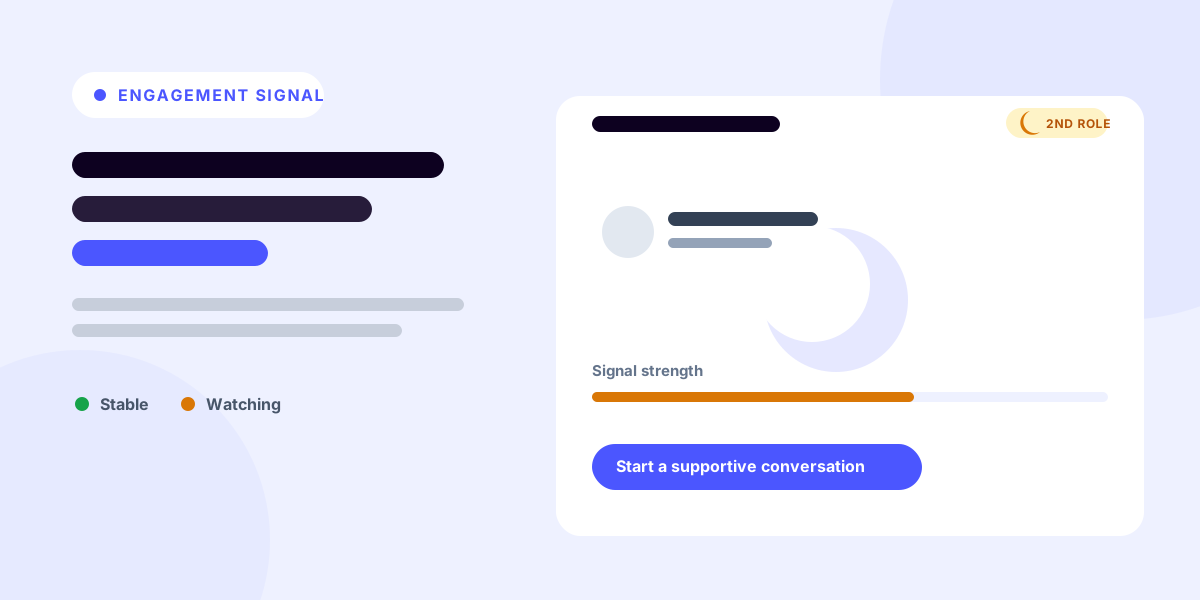
What moonlighting means
Moonlighting is taking on a second job or paid side work alongside a primary role, typically without telling the main employer. The name comes from the image of a second shift worked "by moonlight," after the main day is done. In practice it covers a wide range - a weekend consulting gig, freelance projects, a small side business, or a second full-time role held in parallel (often called dual employment).
Moonlighting became one of the most-discussed workplace issues of recent years, particularly in India's IT and technology sector, where remote and hybrid work made it far easier for people to hold more than one role at once. But it isn't specific to any one country or industry. Anywhere pay is under pressure and work can be done from a laptop, some share of people will take on outside work.
What does a "moonlight shift" mean?
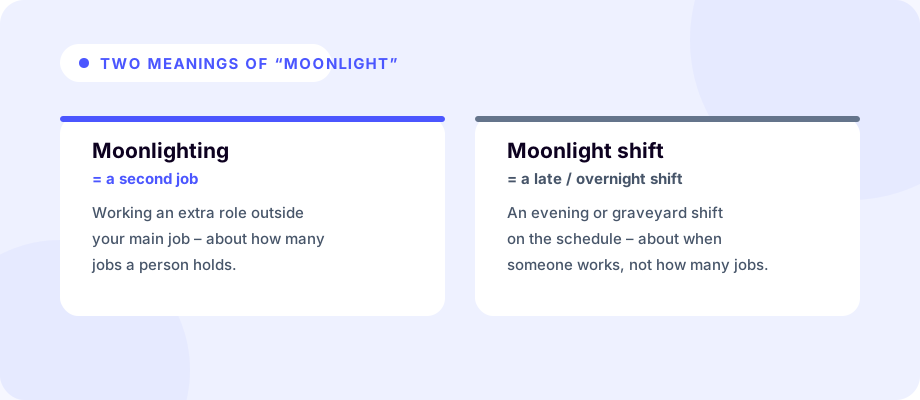
It's worth clearing up a common mix-up, because two similar terms mean different things. A moonlight shift is a scheduling term for a late-evening or overnight shift - the hours worked "by moonlight" rather than in daylight. Some rotas and workforce systems use "moonlight shift" (or a "moonlighting shift") to label a night or swing block, in the same family as a graveyard or twilight shift. The moonlight shift meaning here is about when someone works, not whether they hold a second job.
Moonlighting, by contrast, is about how many jobs someone holds - paid work taken on outside the main role, as described above. The two only share the after-dark imagery. So if a colleague picks up a moonlight shift on the night rota, that's a scheduling matter; moonlighting in the sense this guide covers is a second job or side income held alongside the primary role.
Why employees moonlight - the signal underneath
The instinct is to treat moonlighting as a character issue. It almost never is. Look underneath and you usually find one of a few very human drivers:
- Pay hasn't kept up with the cost of living. When salaries lag inflation, a second income is arithmetic, not greed. In most teams it is the most common driver.
- Disengagement in the main role. An employee who has mentally checked out has spare energy and looks for somewhere to spend it. Here moonlighting overlaps closely with quiet quitting: both are what disengagement looks like from the outside.
- Skill-building or a future plan. Ambitious people take side projects to learn, build a portfolio, or lay the groundwork for a business. That energy is often exactly what you'd want pointed at your own work.
- Insecurity and hedging. After a period of layoffs, some people quietly build a backup income in case their main role disappears. A second job can be an early flight-risk signal: a person preparing, consciously or not, for a move.
Read that list again and the pattern is clear: moonlighting is usually a downstream symptom. Punishing the symptom without touching the cause simply converts a moonlighter into a leaver. Quiet quitting, flight risk, and moonlighting itself get used loosely in these conversations, so if you want the tight version of each, our glossary of retention and engagement terms defines them one at a time.
Is moonlighting a red flag - or a useful signal?
Both, depending on how you read it. As a red flag, a second job for a direct competitor, or work that eats into contracted hours, is a genuine conflict you have to address. But as a signal, moonlighting tells you something valuable and early: this person's needs - financial, developmental, or emotional - aren't being met by the current deal.
That reframing matters because it changes what you do next. If you see moonlighting only as a betrayal to be stamped out, you reach for monitoring and discipline, and you tend to lose the person anyway. If you see it as a signal, you get a chance to fix the underlying issue while the employee is still in the building. The most effective managers treat it like they treat other early warnings - a prompt for a conversation, not a verdict.
Moonlighting and remote work
Remote and hybrid working didn't create moonlighting, but it made it both easier to do and harder to spot - which is a large part of why it became such a flashpoint, especially across India's tech sector. When no one can see your calendar, a second role is simply more feasible.
The tempting response is more monitoring: activity trackers, screenshots, keystroke logs. It rarely works and almost always backfires. Surveillance signals distrust to your entire team, punishes the many for the actions of a few, and accelerates the very disengagement that drives moonlighting in the first place. The managers who handle remote work well lead on outcomes: clear goals, visible progress, and regular one-to-ones that surface problems early. Someone who is fairly paid, well managed, and genuinely absorbed in challenging work has little reason, and little spare energy, to run a second job. And if they do, you'll usually hear about it in a conversation long before you'd ever catch it on a tracker.
Signs an employee may be moonlighting
If you're wondering how to find out if an employee is moonlighting, the honest answer is that you rarely need to investigate - and you shouldn't try to. The signs below are the everyday, observable ones any attentive manager already notices, and each is a prompt for a supportive conversation, not evidence to build a case on.
- Calendar conflicts and hard stops. Recurring "unavailable" blocks during working hours, meetings that can never move, or a sudden wall of hard stops can point to commitments elsewhere.
- Declining output during contracted hours. Not busyness, but results: work that used to land on time slipping, or focus visibly dipping in the main role while energy seems to go somewhere else.
- Disclosed or openly visible outside work. Often the simplest sign - the person has told you, mentioned a side project, or made it public. A second role listed openly is disclosure, not a secret to be uncovered.
- A pattern of unexplained unavailability. Being consistently hard to reach at particular times, or routinely offline during the hours they're paid for, without a clear reason.
Notice what's not on that list: keystroke logs, screenshots, and activity trackers. Those cross from noticing into surveillance, and they tend to cause the very disengagement they claim to detect. If two or three of these signs show up together, treat it as a reason to talk, not to monitor.
Moonlighting, contracts, and a written policy
The rules around moonlighting live in two places: the employment contract and local law. Many contracts contain exclusivity clauses, conflict-of-interest provisions, or limits tied to working hours, and these - not the moonlighting itself - are what an employer can actually act on. Because employment law varies significantly by country and even by state, treat moonlighting as a contractual and legal question and take proper advice for your jurisdiction rather than relying on a general rule of thumb.
What you can do without a lawyer is bring clarity. A written moonlighting policy beats an unwritten expectation enforced case by case. A fair policy:
- States plainly what's allowed and what isn't - for example, no work for competitors and nothing that conflicts with contracted hours or uses company resources.
- Gives people a simple, low-drama way to disclose outside work.
- Explains how requests are reviewed and decided, so the process feels consistent rather than arbitrary.
Clarity protects everyone. It removes the incentive to hide, and it means the rare genuine conflict is handled by policy, not by a manager's mood.
Sample moonlighting policy
The clauses below are a neutral starting point you can copy and adapt - not legal advice. Because employment law varies by country and state, have your own counsel review any policy before you adopt it.
Outside work and moonlighting policy
1. Purpose. We respect employees' time outside work. This policy sets out when outside or secondary work ("moonlighting") is acceptable and how to disclose it, so that expectations are clear and consistent for everyone.
2. Permitted outside work. Employees may take on outside work, provided it does not compete with the company, create a conflict of interest, rely on company time, equipment, or confidential information, or impair performance in their primary role.
3. Disclosure. Employees are asked to disclose paid outside work to their manager or HR in writing. Disclosure is used to check for conflicts, not to refuse reasonable outside activity.
4. Review and decisions. Requests are reviewed consistently against the criteria above. Where a potential conflict exists, we will discuss options before any decision, and the reasons for a decision will be explained.
5. Contracted hours and resources. Outside work must not take place during contracted working hours or rely on company systems, data, or resources.
Keep the wording plain and apply it the same way every time. A policy that's written down and used consistently is what turns moonlighting from a source of suspicion into a routine, predictable process.
How to respond without a witch-hunt
When you learn an employee is moonlighting, the response that keeps good people looks like this:
- Start with a private, curious conversation. Lead with "help me understand," not "explain yourself." The reason usually tells you exactly what to fix.
- Fix the root cause where it's yours to fix. If pay has fallen behind, run the review you were going to run anyway - proactively. If the work has gone flat, that's a growth-and-engagement conversation. Your employee value proposition is the real lever here.
- Apply your policy consistently for genuine conflicts. A competitor role or a breach of contracted hours is a legitimate issue - handle it fairly and the same way every time.
- Don't reach for surveillance. Monitoring keystrokes and hunting for second jobs signals distrust to your whole team and deepens the disengagement that caused the problem. It's the fastest way to turn a moonlighter into a resignation.
For a broader playbook on keeping people once you've spotted the warning signs, see how to retain employees and our guide to the early signs an employee is about to quit.
Where early signals fit
Moonlighting is one of several quiet signals that someone's relationship with their work is changing, alongside disengagement, a refreshed profile, or a spike in outside activity. The point of noticing them is to start a supportive conversation while there's still time to act.
That's the philosophy behind TeamPredict. It reads the public LinkedIn signals your team already shares and flags rising resignation risk early, often weeks before someone hands in notice, so you can address pay, engagement, or growth concerns before a second job becomes a resignation letter. Treat it as a prompt to have the right conversation sooner; the signals come only from what people already share publicly.
Moonlighting, handled well, is a gift: an early, honest signal that the current deal isn't working for someone you'd rather keep. Read it that way, and it becomes a retention opportunity instead of a fight you were always going to lose.
Frequently asked questions
- What does moonlighting mean?
- Moonlighting is when an employee takes on a second job or paid side work outside their main employment, usually without their primary employer's knowledge. The term comes from the idea of working a second shift 'by moonlight' - after hours. It is not automatically wrong, but it is often a signal that something about pay, engagement, or job security is not working.
- What does a moonlight shift mean?
- A moonlight shift is a scheduling term for a late-evening or overnight shift - the hours worked 'by moonlight' rather than in daylight, similar to a swing or graveyard shift. It refers to when someone works, not whether they hold a second job. That's different from moonlighting, which means taking on paid work outside a primary role. The two only share the after-dark imagery.
- How can you tell if an employee is moonlighting?
- The honest signs are the ones any attentive manager already notices - recurring calendar conflicts or hard stops during working hours, output slipping during contracted hours, unexplained unavailability, or outside work the person has openly disclosed or made public. Treat these as a prompt for a supportive conversation, not evidence to gather. Surveillance tools such as keystroke logs and screenshots cross into monitoring and tend to deepen the disengagement that drives moonlighting in the first place.
- Is moonlighting illegal?
- Moonlighting itself is generally not illegal, but whether it breaches an employee's obligations depends on their contract and local employment law. Many contracts include exclusivity, conflict-of-interest, or working-hours clauses, and moonlighting for a competitor or during contracted hours is where most disputes arise. Treat it as a contractual and policy question, and take proper legal advice for your jurisdiction rather than assuming.
- Why do employees moonlight?
- The common drivers are financial pressure when pay hasn't kept up with the cost of living, disengagement or boredom in the main role, a desire to build skills or a future business, and insecurity - hedging against a layoff. Very often moonlighting is a symptom of a fixable underlying issue rather than a sign of a bad employee.
- Should a company have a moonlighting policy?
- Yes - a clear, written moonlighting policy is far better than reacting case by case. A good policy explains what is and isn't allowed (for example, no work for competitors and no conflict with contracted hours), how to disclose outside work, and how requests are handled. Clarity up front prevents both resentment and surprise, and it's fairer than an unwritten rule enforced inconsistently.
- How should a manager respond to moonlighting?
- Start with a calm, private conversation to understand why, not an accusation. If it's a pay or workload issue, address the root cause; if it's a genuine conflict of interest, apply your policy consistently. Surveillance and punishment tend to deepen disengagement and push good people out - the goal is to fix what's driving the second job, not to win a confrontation.
About TeamPredict
TeamPredict Team
We build TeamPredict - retention early-warning software that flags resignation risk from public LinkedIn signals. We write about the patterns that precede a resignation and how people-first teams act on them early. Learn more about TeamPredict
Find out who's showing exit signals.
Score one person's flight risk in a couple of minutes with the free assessment - then let TeamPredict watch the rest daily.
Run the free flight-risk assessmentFree, no signup required.