Stay Interview Questions: 30 Questions and a Free Template to Keep Your Best People
The best time to find out why someone might leave is long before they hand in their notice. That is exactly what a stay interview is for, and the right stay interview questions turn a vague worry about retention into a specific, actionable conversation with the people you most want to keep. This guide gives you a categorized bank of 30 questions grouped by theme, a copyable template you can use this week, and a clear process for running the conversation and acting on what you learn.
A stay interview is a short, structured discussion with a current employee about what keeps them engaged, what frustrates them, and what would make them think about leaving. Done well, it is one of the most effective retention tools you have: low cost, deeply human, and proactive by design.
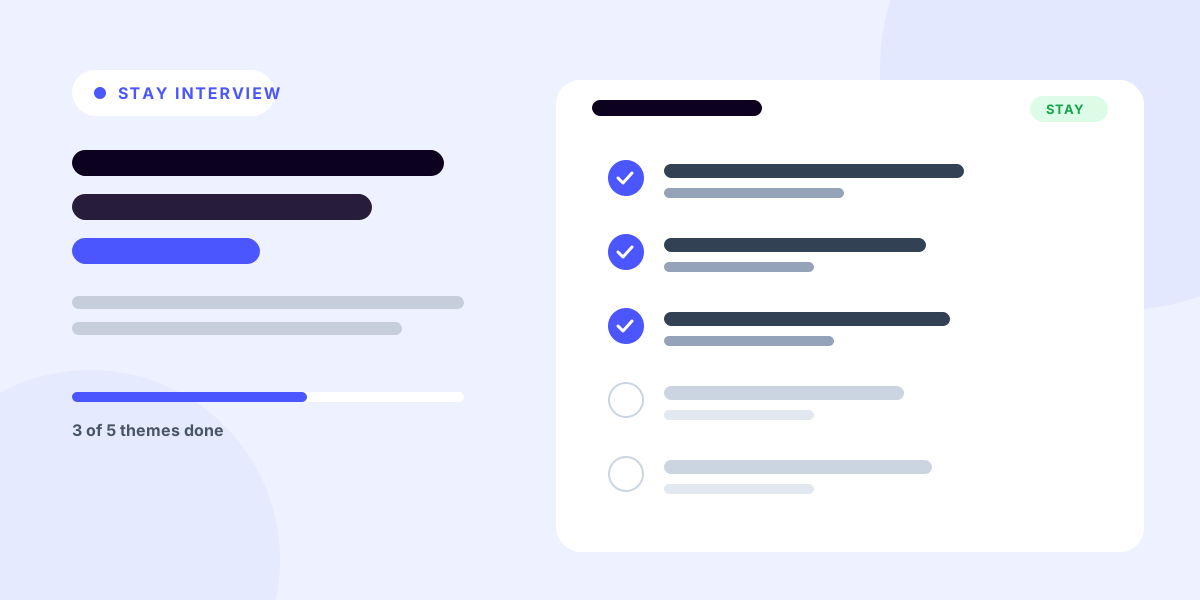
Move through the question bank one theme at a time, before they ever think of leaving.
Stay interviews vs. exit interviews: why proactive beats lagging
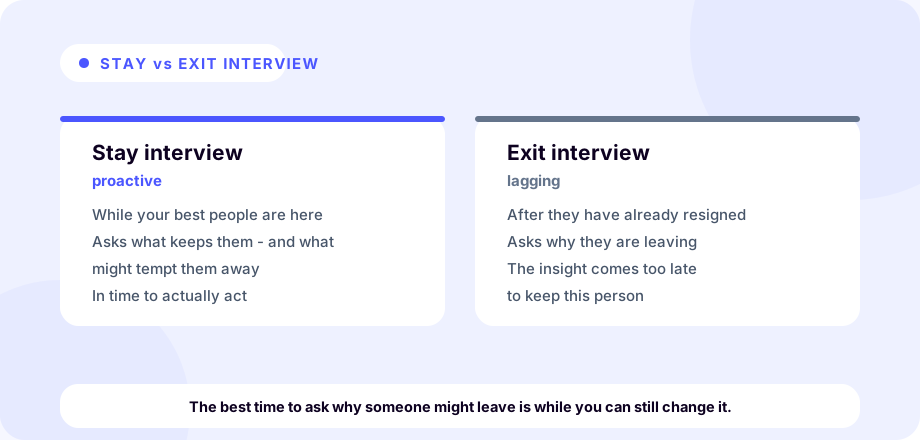
The difference between a stay interview and an exit interview is the difference between a leading indicator and a lagging one.
An exit interview happens after a decision has already been made. The person is leaving; you are simply collecting feedback that might help the people who remain. It is useful, and you should still run them - our exit interview questions and template can help you get honest answers on the way out - but exit feedback is, by definition, too late to change the outcome for the person giving it.
A stay interview flips the timing. You have the conversation while the relationship is intact, while the person is still invested, and while you can still act. You find out that growth feels stalled right now, with months still on the clock to do something about it, rather than learning the full story a year too late.
That timing is the whole point. Most regretted departures are not sudden. They build slowly through unaddressed frustrations: a path that feels blocked, recognition that never comes, a workload quietly creeping past sustainable. Stay interviews give those frustrations a place to surface before they harden into a resignation. They pair naturally with the broader work of reducing employee flight risk and learning to read the signs an employee is about to quit before they become obvious.
How to run a stay interview
A stay interview is a focused, two-way conversation, and it works only if it feels nothing like a performance review, a survey, or an interrogation. A few principles keep it effective:
- Keep it separate from performance and pay. If people think their answers affect their rating or raise, they will tell you what is safe, not what is true. Run stay interviews on their own track.
- Have the right person run it. Usually that is the direct manager, because the manager relationship drives so much of retention. If the manager relationship is itself the concern, have HR or a skip-level run it instead.
- Schedule 30 to 45 minutes. Long enough to go beyond surface answers, short enough to stay focused.
- Pick 8 to 12 questions, not all 30. Use the bank below as a menu. Choose questions that fit the person and the moment, and follow the threads that open up.
- Listen more than you talk. Your job is to understand, not to defend or solve in real time. Take notes. Ask "tell me more" often.
- Do not promise what you cannot deliver. It is fine to say "I can't change that, but here's what I can do." Broken promises do more damage than honest limits.
Choose who to prioritize deliberately. You cannot interview everyone at once, so start with the people whose departure would hurt most - high performers, single points of failure, anyone recently passed over - and anyone already showing early disengagement. For more on spotting that early, see our guide on how to predict employee turnover before it happens.
30 stay interview questions, grouped by theme
Use these as a bank, not a script. Pull 8 to 12 that fit the person in front of you, ask them openly, and let the answers lead.
Role and growth
- What parts of your job energize you most, and which parts drain you?
- When you've had a great day at work recently, what made it great?
- Are you learning and growing here in ways that matter to you? Where do you feel stuck?
- What skills do you want to build this year, and are you getting the chance to build them?
- If you could redesign your role, what would you add, drop, or change?
- Do you feel your strengths are being used well? What's underused?
Recognition and value
- Do you feel genuinely valued for the work you do here?
- When was the last time you felt truly recognized, and what was it for?
- Is there work you're proud of that you feel went unnoticed?
- How do you most like to be recognized - publicly, privately, in growth, in pay?
- Is there anything you're doing that you feel is taken for granted?
Manager relationship
- What can I do more of to support you? What should I do less of?
- Do you get enough feedback from me - and is it the kind that's useful?
- When something's frustrating you, do you feel you can bring it to me directly?
- Is there anything I've done that's made your job harder than it needs to be?
- What would make our one-on-ones more valuable to you?
Workload and wellbeing
- Is your current workload sustainable, honestly?
- Do you have what you need - time, tools, support - to do your job well?
- Where do you feel stretched too thin, and what would relieve it?
- How are you feeling about your work-life balance right now?
- Is there anything about how we work that's quietly wearing you down?
What would make you stay or leave
- What would make you consider leaving, even hypothetically?
- What keeps you here right now?
- If you got a call from a recruiter tomorrow, what would make you hesitate to take the meeting - or take it?
- Is there anything that's been frustrating enough to make you think about looking elsewhere?
- What's one thing we could change that would make a real difference to whether you stay?
- On a rough day, what's the thing that makes you think "maybe it's time to move on"?
The future
- Where do you want to be in a year, and is that path visible here?
- What does your ideal next step look like, and how can we help you get there?
- A year from now, what would need to be true for you to be glad you stayed?
A copyable stay interview template
Keep your structure simple and repeatable. Here is a template you can copy into your notes or a shared doc and reuse for every conversation.
STAY INTERVIEW - TEMPLATE

Employee: ____________________   Date: ____________
Interviewer: _________________   Tenure / role: ____________

1. OPENING (2 min)
   "This isn't a review. I want to understand what's working for you,
   what isn't, and what would keep you here long-term. Be candid -
   I'm here to listen and act, not to judge."

2. WHAT'S WORKING (5–10 min)
   - What energizes you most about your role right now?
   - What's making this a good place to work for you?
   Notes:

3. WHAT'S FRUSTRATING (10–15 min)
   - What's draining or frustrating right now?
   - What's harder than it needs to be?
   - Anything that's made you think about looking elsewhere?
   Notes:

4. GROWTH & FUTURE (5–10 min)
   - Where do you want to be in a year?
   - Is that path visible here? What's missing?
   Notes:

5. THE DIRECT QUESTION (5 min)
   - What would make you consider leaving?
   - What's one change that would make a real difference to you?
   Notes:

6. CLOSE (2 min)
   "Thank you. Here's what I heard: ______. By [date], I'll follow up on:
   ______. Anything I missed?"

FOLLOW-UP COMMITMENTS
   - Action 1: __________  Owner: ______  By: ______
   - Action 2: __________  Owner: ______  By: ______
The single most important line in that template is the close. Reflecting back what you heard proves you listened, and naming a date turns the conversation into a commitment.
What to do after the stay interview
The conversation is only half the work. A stay interview that leads to no visible change is worse than no stay interview at all - it teaches people that speaking up is pointless. Here is how to act on what you hear:
- Sort what you heard into three buckets. Things you can fix quickly, things that need time or buy-in, and things you genuinely cannot change. Be honest about which is which.
- Pick one or two things to act on fast. Speed signals sincerity. A small change delivered in two weeks builds more trust than a big change promised for "someday."
- Close the loop explicitly. Go back to the person: "You said X, so we're doing Y." Name what you can't change too, and explain why. Honesty preserves trust even when the answer is no.
- Look for patterns across conversations. If three people raise the same frustration, you have a systemic issue, not an individual one. Roll those themes into your broader retention work.
- Track and revisit. Note your commitments and check back next quarter. Retention is built on follow-through over time, not a single good chat.
Acting well on stay interviews fits into a larger system. If you want the full playbook, our guides on why good employees leave and how to keep them and employee engagement strategies that reduce turnover cover the structural changes that make individual conversations stick.
Pairing stay interviews with earlier signals
Stay interviews work best when you have them with the right people at the right time - and the hardest part is often knowing who and when. A stay interview scheduled a week before someone has already mentally checked out is a near-miss; the same conversation two months earlier can change the outcome entirely.
This is where structured early signals help. Attentive management catches a lot - shifts in tone, withdrawal from long-term projects, a quiet drop in discretionary effort. But managers are busy, and some signals are easy to miss. TeamPredict surfaces early, publicly available indicators of renewed job-market interest from LinkedIn profile activity into a simple resignation-risk level per tracked employee, so you get lead time instead of a surprise. It tells you when a stay interview has become urgent - and stay interviews give you the conversation to do something about it. Used together, you get both the signal and the response.
Make the conversation a habit
The teams that keep their best people are simply having honest conversations on a regular cadence, listening carefully, and following through on what they hear. A good stay interview costs you 45 minutes and a willingness to act - and it can save you a resignation you never saw coming, the months of disruption that follow, and the institutional knowledge that walks out the door.
Start small. Pick the three people you'd least want to lose, schedule a stay interview with each using the template above, and act on at least one thing you hear. If you'd also like earlier warning on who to prioritize, so the conversation happens while it can still change the outcome, start a free TeamPredict trial and see your team's resignation-risk signals in one place. It takes minutes to set up, with a 30-day free trial: you won't be charged until the trial ends, and you can cancel anytime.
Stay interviews are among the most effective tools in any employee retention program.
Weave the same spirit into your regular one-on-one meeting questions, too.
Frequently asked questions
- What is a stay interview?
- A stay interview is a short, structured conversation with a current employee about what keeps them engaged, what frustrates them, and what would make them consider leaving. Unlike an exit interview, which happens after someone has already resigned, a stay interview gives you the chance to act while the person is still on your team and the relationship is intact. The goal is to surface and fix issues early, not to evaluate performance.
- What questions should you ask in a stay interview?
- Ask open, non-leading questions across a few themes: role and growth (what energizes them and where they want to develop), recognition (whether they feel valued), the manager relationship (what support they need), workload and wellbeing (whether their pace is sustainable), and the direct question of what would make them stay or leave. Close with a forward-looking question about where they want to be in a year. Aim for roughly 30 questions in your bank and pick 8 to 12 for any single conversation.
- How is a stay interview different from an exit interview?
- A stay interview is proactive and a leading indicator: you ask while you can still change the outcome. An exit interview is reactive and a lagging indicator: by the time someone is leaving, the feedback can improve things only for the people who remain. Both have value, but stay interviews are the ones that actually help you retain the person in front of you.
- How often should you run stay interviews?
- For most teams, once or twice a year per employee is a reasonable cadence, with extra conversations after major changes such as a reorg, a missed promotion, a new manager, or a stretch of heavy workload. Keep them separate from performance reviews so people speak freely. Prioritize the people whose departure would hurt most and anyone showing early signs of disengagement.
- Who should run the stay interview - the manager or HR?
- In most cases the direct manager should run it, because the manager relationship is one of the strongest drivers of whether someone stays, and the conversation builds trust. HR or People Ops can run them when the relationship with the manager is part of the concern, when you want a neutral party, or when you are gathering themes across a whole team. The key is that whoever runs it has the standing to act on what they hear.
About TeamPredict
TeamPredict Team
We build TeamPredict - retention early-warning software that flags resignation risk from public LinkedIn signals. We write about the patterns that precede a resignation and how people-first teams act on them early. Learn more about TeamPredict
Find out who's showing exit signals.
Score one person's flight risk in a couple of minutes with the free assessment - then let TeamPredict watch the rest daily.
Run the free flight-risk assessmentFree, no signup required.