Skip-Level Meetings: A Manager's Guide to Running Them Well
A skip-level meeting is one of the most useful and most misused tools a senior leader has. Run well, it gives you an unfiltered view of how your teams actually work, builds trust across levels, and surfaces small problems while they are still small. Run badly, it becomes a channel for going around your managers or checking up on people. This guide covers what a skip-level meeting is, when and how to run one, a ready-to-use agenda and template, and a grouped bank of skip-level meeting questions you can pull from. If you only need the agenda, the skip-level meeting agenda template is ready to fill in, copy or print. To check how your own way of managing might read two levels down, take the leadership style quiz.
None of it is complicated. The hard part is holding the right intent: you are there to understand and support, not to inspect.
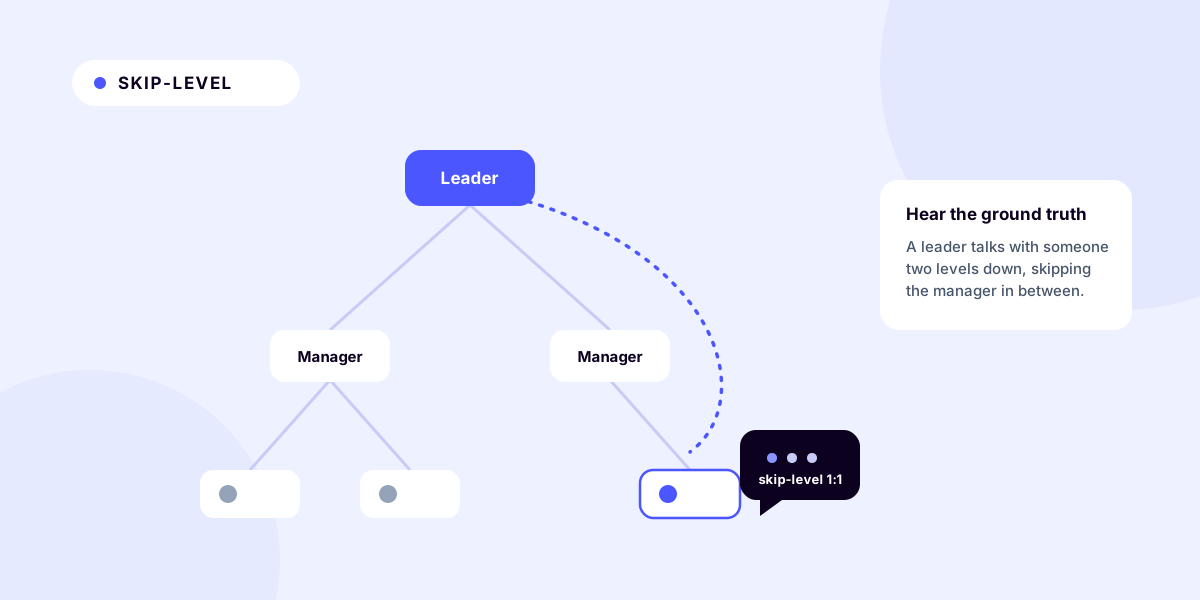
A skip-level connects a leader with someone two levels down, skipping the manager in between.
What is a skip-level meeting?
A skip-level meeting is a conversation between a leader and an employee one level below their direct reports, the people who report to your reports. You skip the layer of management in between, which is where the name comes from. If you run a department, it is time with the individual contributors and team leads who do not normally sit across from you one on one.
The point is not to bypass your managers. It is to hear the ground truth that naturally gets smoothed out as it travels up the chain, and to build a relationship with people you are responsible for but rarely speak to directly. A good skip-level leaves the middle manager stronger, not sidelined.
Most leaders run these as a recurring rhythm rather than a one-off. The format varies, but the intent stays constant: understand how work really flows, where people are stuck, and what they need, straight from the source.
Why skip-level meetings matter
The higher you sit, the more filtered your information becomes. Every layer of management, usually with good intentions, rounds off the edges of what it passes up. Skip-levels are how you get some of those edges back.
- You hear what gets filtered out. Bad news travels slowly upward. Skip-levels give you a direct line to the friction, confusion, and small failures that rarely make it into a status update.
- You build trust across the org. People work harder for leaders they have actually talked to. A single honest conversation makes you a real person rather than a name on an org chart.
- You spot systemic problems early. When three different people mention the same broken process, you have found something worth fixing. One-on-ones with your directs will not always reveal it; a spread of skip-levels will.
- You develop your managers. The themes you gather are a gift to the middle manager: honest, aggregated feedback about what is working and what is not, delivered as support rather than a gotcha.
- You catch retention risk sooner. Disengagement and quiet frustration often show up in a skip-level before they show up anywhere else, which buys you time to act.
What a skip-level meeting is not
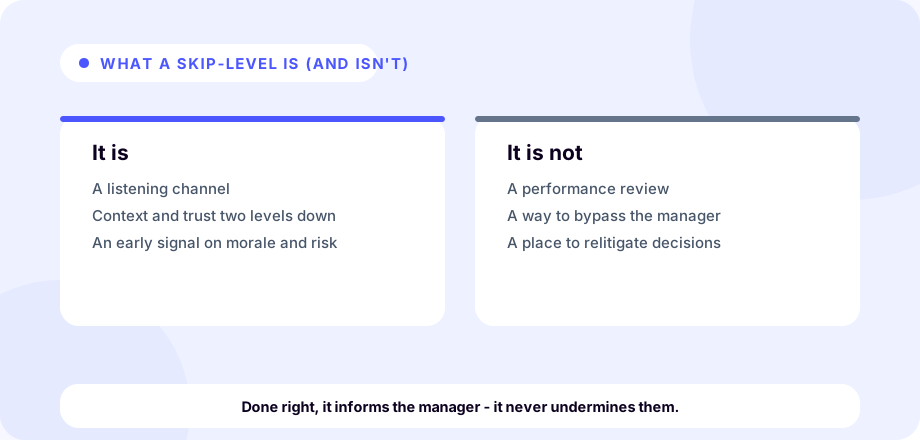
Getting the guardrails right is what separates a skip-level that builds trust from one that quietly damages it.
- Not a performance review. No ratings, no scoring, no notes that follow the person around. The moment it feels evaluative, candor disappears.
- Not a backchannel around the manager. You are not collecting complaints about someone's boss to act on unilaterally. If real issues surface, you handle them as a partner to the manager, not behind their back.
- Not surveillance or a status report. You are not there to check whether people are busy or to extract project updates you could read in a tool. That framing poisons the whole exercise.
- Not a one-time fix. A single awkward skip-level after a bad quarter reads as a fishing expedition. The value comes from a steady, predictable rhythm.
Two rules keep skip-levels healthy. First, tell the manager before the meeting happens; nobody should learn about it afterward. Second, be transparent with the employee about why you are meeting and what you will and will not do with what they share.
Skip-level meeting format and cadence
There is no single right skip-level meeting format. The main choice is between one-on-one and small-group sessions, and each has a trade-off.
- One-on-one skip-levels go deepest. They are the best format for building real trust and hearing candid answers, and they are worth the time for people whose perspective or retention matters most.
- Group skip-levels are efficient and good for a broad temperature check across a team, but people guard their answers more in front of peers. Use them to open a door, not to get the sensitive stuff.
On cadence, aim for a rotation you can actually sustain. Seeing each skip-level report once or twice a year, for 30 to 45 minutes, is a realistic rhythm for most leaders. You do not need to meet everyone every month, and you should not pretend you will. Consistency beats ambition here: a predictable schedule that happens is worth far more than an aggressive one that lapses after two weeks. For a team spread across offices, the time zone converter finds a time inside everyone's working day, or shows that there isn't one.
Prepare lightly but deliberately. Give the person a warm, low-pressure heads-up about the purpose, skim what their team is currently working on so you can follow along, and confirm the manager knows. These conversations are not a replacement for the manager's regular one-on-one meetings; they sit alongside them and answer a different question.
A skip-level meeting agenda you can use
A simple, repeatable structure keeps the conversation focused and makes it easy to run many of them without reinventing the format each time. Here is a skip-level meeting agenda and template you can copy into your notes and reuse.
SKIP-LEVEL MEETING - AGENDA / TEMPLATE

Employee: ____________   Team: ____________   Date: ________
Their manager: ____________   Last skip-level: ________

BEFORE THE MEETING
  [ ] Tell their manager it's happening and why (no surprises)
  [ ] Send a warm, low-pressure invite explaining the purpose
  [ ] Skim the team's current projects so you can follow along

1. SET THE TONE (2 min)
   "This isn't a review, and it won't get passed on with your name
   attached. I want to understand how things really are for you and
   your team, and hear what I'm missing from where I sit."

2. THE PERSON (5 min)
   - How long on the team, what they enjoy, what a good and bad day
     look like
   Notes:

3. THE WORK & BLOCKERS (10 min)
   - Where work gets stuck, what's harder than it should be, what
     they're genuinely excited about
   Notes:

4. TEAM & SUPPORT (10 min)
   - Whether the team has what it needs; where support is missing
   Notes:

5. GROWTH & FEEDBACK UP (10 min)
   - Career direction; one thing they'd change about how we run things
   Notes:

6. CLOSE (3 min)
   "Here's what I heard: ______. Here's what I'll do with it, and what
   I'll take to your manager as a theme rather than a quote: ______."

AFTER THE MEETING
  [ ] Separate individual issues from systemic ones
  [ ] Share themes with the manager as a partner, never attributed gossip
  [ ] Pick one thing to act on quickly and close the loop
The two lines that matter most are the opening and the close. The opener sets the safety that makes honesty possible. The close proves you were listening and turns the conversation into a commitment.
Skip-level meeting questions, grouped by theme
Use these as a bank, not a script. Pick six or eight that fit the person and the moment, ask them openly, and follow the threads that open up. Rotate the themes over time so repeat conversations stay fresh.
Warm-up and getting oriented
- How long have you been on the team, and what drew you to this work?
- What does a good day look like for you here? A frustrating one?
- If you were describing what your team does to a new hire, how would you put it?
How the work actually flows
- Where does work most often get stuck or slow down?
- What is something that is harder than it should be around here?
- Is there a process or tool that quietly wastes your time every week?
- When priorities shift, do you understand why, and how does that reach you?
- What are you working on that you are genuinely excited about?
Team health and how you are supported
- Does the team have what it needs to do good work: people, tools, clarity?
- When you are blocked, do you know where to go, and does it actually get resolved?
- What helps you most in how the team is run day to day?
- Where could you use more support that you are not getting right now?
- How is the workload across the team? Is it sustainable, or is anyone running hot?
Growth and career
- Are you learning and growing in ways that matter to you?
- What skills do you want to build, and is there room to build them here?
- Where do you want to be in a year or two, and is that path visible?
- Is there work you would love to take on that you have not had the chance to?
Feedback and ideas upward
- If you could change one thing about how the department runs, what would it be?
- What does leadership seem out of touch with on the ground?
- Was there a recent decision that landed differently than we intended?
- What should someone at my level be paying more attention to?
- What is working well that we should protect or do more of?
The bigger picture
- Do you feel your work connects to where the company is going?
- Do you feel recognized for what you contribute?
- What would make you more likely to still be here, and happy, in two years?
- Is there anything I did not ask that you were hoping I would?
Question 11 is worded to invite what is working, not to grade the manager. If someone raises a real concern about their manager, hear it fully, but resist the urge to promise action on the spot. Your job is to understand the pattern, not to relitigate one relationship in one meeting.
What to do after a skip-level meeting
The conversation is only half the work. A skip-level that changes nothing teaches people that talking to you is pointless, which is worse than not meeting at all.
- Separate the individual from the systemic. A frustration one person feels is worth noting. The same frustration from several people is a problem you own and should fix.
- Protect the manager relationship. Bring what you heard to the manager as themes and patterns, framed as support, never as "so-and-so said this about you." You are trying to make them better, not to catch them out.
- Act on one thing fast. Speed signals sincerity. A small, visible fix within a couple of weeks builds more trust than a big change promised for someday.
- Close the loop. Go back to the person, or to the team, and say what you heard and what you are doing about it. Name what you cannot change and why. Honesty preserves trust even when the answer is no.
- Track patterns over time. Keep light notes across your skip-levels so recurring themes become visible. Those themes are the raw material for stronger employee engagement strategies that reduce turnover. When you write them up for the wider people team, it helps if everyone is using the same words for the same things, which is what our HR terms glossary is for.
Skip-level meetings and early retention signals
Because skip-levels reach people you do not talk to every day, they are a good place to catch the quiet drift that comes before a resignation. Fading energy, vaguer answers about the future, a shift from "we" to "they," and a tapering of the extra ideas and initiative that used to come freely are all worth noticing. Our guides on the signs an employee is about to quit and on reducing employee flight risk go deeper on reading those cues. When a skip-level raises a real flag, a more structured stay interview is often the right next step.
The hard part is rarely the conversation. It is knowing who to prioritize and when, since you cannot go deep with everyone at once, and the people most worth keeping are often the best at hiding that they are slipping. A quick flight risk assessment can help you rank who to see first. For ongoing coverage, TeamPredict watches the public LinkedIn changes that tend to precede a move, a refreshed headline, new skills, an "Open to Work" badge, or a cluster of profile edits, and turns them into a simple resignation-risk level for each person you track. It never contacts your employees and reads only public signals. It tells you when a skip-level or a stay interview has become more important than the calendar suggests, and the conversation gives you the way to act on it.
Make skip-levels a habit
The leaders who stay genuinely close to their organizations are not doing anything exotic. They talk to people below their direct reports on a regular cadence, listen more than they speak, and follow through on what they hear. A skip-level costs you 45 minutes and a willingness to act, and it can catch a broken process, a frustrated high performer, or a resignation you never saw coming.
Start small and concrete. Pick three people two levels down whose perspective you would value, schedule a skip-level with each using the agenda above, and act on at least one thing you learn. For the wider system these conversations feed into, our guide on how to retain employees covers the structural side. And if you want earlier warning on who to prioritize, so the right conversation happens while it can still change the outcome, start a free TeamPredict trial and see your team's resignation-risk signals in one place. It takes minutes to set up, with a 30-day free trial: you will not be charged until the trial ends, and you can cancel anytime.
Frequently asked questions
- What is a skip-level meeting?
- A skip-level meeting is a conversation between a leader and an employee who reports to one of that leader's direct reports, skipping the manager in between. The goal is to hear the ground-level reality that gets smoothed out as it travels up the chain, build trust across levels, and spot problems while they are still small. Done well, it supports the middle manager rather than going around them.
- What is the purpose of a skip-level meeting?
- The purpose is to give senior leaders an unfiltered view of how teams actually work, strengthen relationships with people they rarely talk to directly, surface systemic issues early, and develop their managers with honest upward feedback. It is not a performance review, a status report, or a way to check up on people. The best skip-levels leave both the employee and the manager better off.
- How often should you hold skip-level meetings?
- For most leaders, rotating through their skip-level reports so each person gets a conversation once or twice a year is a realistic rhythm, with 30 to 45 minutes per meeting. You do not need to see everyone every month. What matters is consistency and follow-through: a predictable cadence that actually happens beats an ambitious schedule that quietly lapses.
- What questions should you ask in a skip-level meeting?
- Ask open, non-leading questions across a few themes: how the work really flows and where it gets stuck, whether the team has the support and tools it needs, growth and career direction, and upward feedback about what leadership is missing. Avoid turning it into a session that rates the person's manager. Keep a bank of 20 to 30 questions and pick the handful that fit the person and the moment.
- Do skip-level meetings undermine managers?
- They only undermine managers when they are run badly, as a backchannel for complaints or a surprise the manager finds out about afterward. To keep them healthy, tell the manager before the meeting happens, be clear with the employee that it is not a complaint hotline, and share what you learn as themes rather than attributed quotes. Handled this way, skip-levels give managers useful feedback and support they would not otherwise get.
About TeamPredict
TeamPredict Team
We build TeamPredict - retention early-warning software that flags resignation risk from public LinkedIn signals. We write about the patterns that precede a resignation and how people-first teams act on them early. Learn more about TeamPredict
Find out who's showing exit signals.
Score one person's flight risk in a couple of minutes with the free assessment - then let TeamPredict watch the rest daily.
Run the free flight-risk assessmentFree, no signup required.