Employee Counteroffers: When (and When Not) to Make One
A valued employee walks into your office, closes the door, and hands you a resignation letter. They have another offer. Your stomach drops, and your first instinct is to make it go away - to match the number, beat it, do whatever it takes to keep them. That instinct is the employee counteroffer, and it's one of the most consequential, most poorly-made decisions a manager faces. Made well, in the rare right circumstances, a counteroffer can keep a critical person. Made reflexively, as it usually is, it papers over a problem that comes back within months and often damages trust on the way. This guide is a clear-eyed decision framework: when a counteroffer genuinely makes sense, when it doesn't, why most of them fail, what to do instead - and how acting on early signals lets you avoid the whole scramble.
A pay bump buys a few months; fixing the real driver early keeps the person.
What a counteroffer actually is - and what it's really responding to
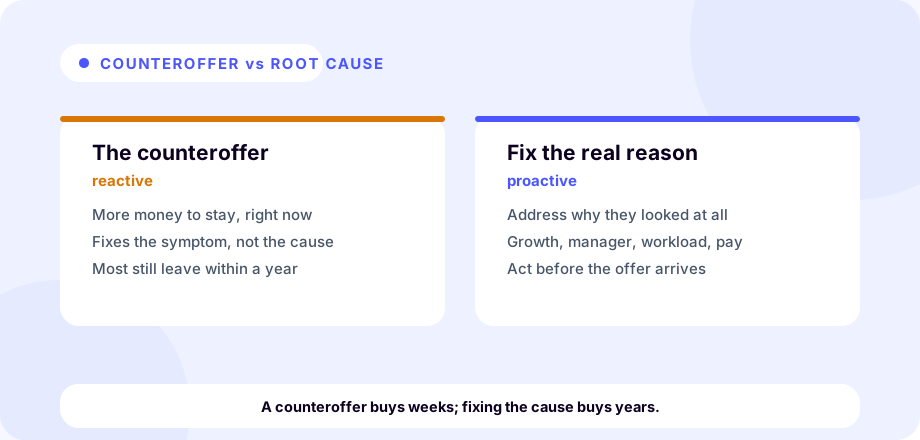
A counteroffer is a retention move made under duress. The defining feature is the timing, not the money. You're making a decision at the worst possible moment: after the person has already decided to leave, already has a competing offer in hand, and the relationship is already strained by the fact that they went looking and didn't tell you.
That framing matters, because it explains why counteroffers go wrong so often. A resignation with another offer attached is rarely the start of the problem. It's the end of a process that's been unfolding for weeks or months: a slow accumulation of unaddressed frustrations that finally pushed someone to update their resume, take the calls, and sit the interviews. By the time the letter is on your desk, you're not deciding whether to keep an engaged employee - you're deciding whether to reverse a decision they've already mentally made. Understanding why good employees leave and how to keep them is the necessary backdrop here: the competing offer is almost always a symptom, and the counteroffer treats the symptom.
The case for a counteroffer: when it can make sense
Counteroffers have a bad reputation, much of it deserved. But "never make one" is too blunt a rule. There are narrow circumstances where a counteroffer is a reasonable, even wise, move. They share a few features.
The person is genuinely critical and hard to replace. Not "good" - critical. Someone holding irreplaceable institutional knowledge, a key customer relationship, or a role you genuinely cannot backfill in a reasonable window. The bar should be high, because counteroffers carry costs even when they work.
The driver is something you can fairly and durably fix. If the person is leaving over pay that is, on honest examination, below market or below their internal peers, a correction addresses a real, fixable problem. The test: would you have made this adjustment anyway, on the merits, if you'd known earlier? If yes, the counteroffer is just an overdue correction made under pressure. If the only reason for the number is the competing offer, you're on shakier ground.
You can act without setting a destructive precedent. In a small team where the move can be handled discreetly and defensibly, a one-off correction may be fine. If it would teach the rest of the team that the way to get a raise is to threaten to leave, the long-term cost outweighs the short-term save.
Even in these cases, treat the counteroffer as buying time, not solving the problem. The most a good counteroffer does is reopen a window to fix the underlying driver - which means the real work starts after they accept, not when they do.
Why most counteroffers fail
For every counteroffer that makes sense, several more are reflexes that backfire. Here's why the base rate is so poor.
They treat the symptom, not the cause
This is the core failure. A pay bump doesn't fix stalled growth, a weak manager relationship, a lack of recognition, or eroded trust in where the company is headed. If those are the real drivers (and they usually are), the dissatisfaction that sent the person looking is still there a few months later, now with a higher salary attached and no remaining reason to give you another chance. No source pins the share down precisely, but many people who accept a counteroffer end up leaving anyway within a year. The logic explains why: an unfixed cause produces the same outcome on a delay.
They damage trust in both directions
Once you've made a counteroffer, you know the person was actively interviewing - and that knowledge has a way of quietly coloring future decisions about promotions, stretch projects, and succession. Meanwhile, the employee may internalize a corrosive lesson: that the path to being valued runs through threatening to leave. If that lesson spreads, you've trained your team to negotiate by ultimatum. Neither side fully trusts the other after a counteroffer, which is a fragile foundation for the relationship you're trying to save.
They're made under pressure, on the worst information
Good retention decisions come from understanding what someone actually needs and acting deliberately. Counteroffers come from panic, a deadline, and the fear of an open seat. That's the opposite of the conditions you want for a high-stakes call - and it's why the same managers who'd never approve an out-of-band raise in a calm planning cycle will do exactly that when a resignation forces their hand.
What to do instead
If a counteroffer is the wrong default, what's the right one? A short, deliberate process, even in the moment.
1. Slow the decision down. You don't have to respond to a resignation with a counteroffer on the spot - and you shouldn't. Thank the person for telling you, ask for a real conversation, and buy yourself time to think clearly rather than react.
2. Understand the real reason. Have an honest conversation about what actually drove the search. Listen for the driver beneath the stated one - "more money" often means "I don't feel valued" or "I can't see a future here." This is, in effect, a stay interview happening far too late, but it's still worth doing well.
3. Decide whether the cause is durably fixable. Separate "can I match the number" from "can I fix the reason." If the genuine driver is growth, role design, workload, or manager fit, ask honestly whether you can address that - not just the comp. A real fix to a real cause is the only counteroffer worth making.
4. If you can't fix it, let them leave well. Sometimes the honest answer is that you can't match what's pulling them away, or the role has run its course for them. That's not a failure. Protect the relationship, plan a clean handoff, and capture the lesson. People who leave on good terms become referral sources and sometimes boomerang employees who return more skilled than when they left. A graceful exit is a better outcome than a coerced, resentful stay.
5. Capture the lesson for the role as well as the person. Whatever drove this resignation is probably affecting someone else on your team right now. Feed what you learned back into how you manage the people who remain.
For the full version of this process - run before a resignation rather than after - see our manager's playbook on how to retain employees, which lays out the diagnose-converse-act-follow-through loop that makes counteroffers largely unnecessary.
How to avoid the counteroffer scramble entirely
Here's the most important reframe in this guide: the best way to handle a counteroffer is to never be in the position of making one.
Every counteroffer scramble is, at root, a failure of timing. The dissatisfaction that produced the resignation was building for weeks or months. The competing offer didn't create the problem; it just made it visible at the most expensive possible moment. If you'd seen the rising risk earlier - while the person was frustrated but still open, before they'd invested in a job search and accepted an offer - you could have addressed the real driver calmly, on your own terms, in a normal planning cycle. No ultimatum, no panic, no out-of-band raise, no damaged trust.
That's the entire argument for proactive retention over reactive counteroffers. The earlier you know, the more options you have and the cheaper they are. Managers can and should watch for the signs an employee is about to quit - the withdrawal from long-term projects, the quieter one-on-ones, the cooler attitude - and they should understand how to identify and reduce employee flight risk as a standing practice rather than a crisis response. But human attention is uneven, and the people most likely to surprise you with a resignation are often your most self-sufficient ones, the ones who never complain until they're already halfway out the door.
This is the specific gap TeamPredict was built to close. It surfaces early, proactive signals of resignation risk from publicly available LinkedIn profile activity and summarizes them into a simple resignation-risk level for each tracked employee - so a manager gets a person-level read on rising risk before it becomes a resignation letter with another offer attached. That lead time is the difference between a calm conversation and a counteroffer scramble.
A few honest framings, because this category is easy to misread:
- Treat a "high" risk level as the start of a supportive conversation, held early. It is never proof that someone is leaving, or a reason to treat them differently.
- The signals come from public professional activity, not private monitoring, and they belong alongside attentive management and your engagement data rather than in place of them.
Used well, it changes the question from "how big a counteroffer do I need" to "what does this person actually need, and can I give it to them before they go looking", which is a far better question to be answering, and a far cheaper one. At $5 per tracked employee per month, the math against even one prevented regrettable departure (let alone a panicked, trust-damaging counteroffer) is not close.
The bottom line on counteroffers
A counteroffer is a high-stakes decision made at the worst possible time, on the worst possible information, and most of the time it postpones a departure rather than preventing one. Reserve it for the rare case: a genuinely critical person, a cause you can fairly and durably fix, and an adjustment you'd defend on the merits regardless of the competing offer. In every other case, slow down, understand the real driver, fix the cause if you can, and let the person leave well if you can't.
But the deeper lesson is that the counteroffer is the wrong battlefield. The teams that keep their best people notice concerns months earlier and act while there's still room to act, instead of bidding at the resignation desk. If you'd like that lead time for your own team, the chance to address rising risk before it ever becomes a resignation and a rushed counteroffer, you can start a free TeamPredict trial and see your team's resignation-risk signals in one place. It takes minutes to set up, runs for 30 days, and costs nothing until the trial ends; cancel anytime before then and pay nothing.
Frequently asked questions
- Should you make a counteroffer when an employee resigns?
- Sometimes, but far less often than managers' instincts suggest. A counteroffer can make sense for a genuinely critical, hard-to-replace person when the issue driving them out is something you can fairly and durably fix - and when you'd have made the same offer anyway, on the merits, before the resignation forced your hand. It rarely makes sense when the resignation is about deeper issues like growth, the manager relationship, or trust, because money alone won't resolve those. Treat a counteroffer as the exception, not the default response to a resignation.
- Why do most counteroffers fail?
- Most counteroffers fail because they treat a symptom (the competing offer) rather than the cause (why the person was looking in the first place). A pay bump doesn't fix stalled growth, a weak manager relationship, or lost trust, so the underlying dissatisfaction returns within months. Counteroffers can also damage trust on both sides - the company now knows the person was looking, and the employee may feel they had to threaten to leave to be valued. Many people who accept a counteroffer leave anyway within a year.
- What should I do instead of a counteroffer?
- First, understand the real reason behind the resignation through an honest conversation, then decide whether the underlying issue is something you can durably fix - growth, role, workload, manager fit - rather than just matching a number. If you can, address that cause directly. If you can't, let the person leave well: protect the relationship, plan a clean handoff, and capture the lesson so the next person in that role doesn't reach the same point. The best alternative of all is acting on concerns months earlier, before a resignation forces a rushed decision.
- Do counteroffers damage trust?
- They often do, in both directions. Once you've made a counteroffer, you know the person was actively looking, which can quietly affect how they're viewed in future planning and promotions. And the employee may internalize the lesson that the way to get a raise or recognition is to threaten to leave - which encourages exactly the wrong behavior across the team if it becomes known. A counteroffer made under pressure rarely repairs the relationship; it usually just postpones the departure.
- How can I avoid the counteroffer scramble entirely?
- By moving the whole decision earlier. The counteroffer scramble happens because you found out about the dissatisfaction at the worst possible moment - after the person already has another offer in hand and the relationship is strained. If you notice rising flight risk weeks or months earlier, you can address the real driver calmly, on your own terms, before it ever becomes a resignation. Combining attentive management with early-warning signals is how teams trade reactive counteroffers for proactive retention.
About TeamPredict
TeamPredict Team
We build TeamPredict - retention early-warning software that flags resignation risk from public LinkedIn signals. We write about the patterns that precede a resignation and how people-first teams act on them early. Learn more about TeamPredict
Find out who's showing exit signals.
Score one person's flight risk in a couple of minutes with the free assessment - then let TeamPredict watch the rest daily.
Run the free flight-risk assessmentFree, no signup required.